

Product Description
Boswellia dioscoridis is a remarkable pachycaul tree endemic to the island of Socotra, off the coast of Yemen in the Arabian Sea. Like many Socotran endemics, it has evolved in isolation to form one of the most distinctive and architecturally striking small trees in the genus, with a swollen, water-storing trunk and a sculptural branching pattern that makes it instantly recognizable. The species is named in honor of Pedanius Dioscorides, the ancient Greek physician and botanist whose work has been linked to Socotra since antiquity.
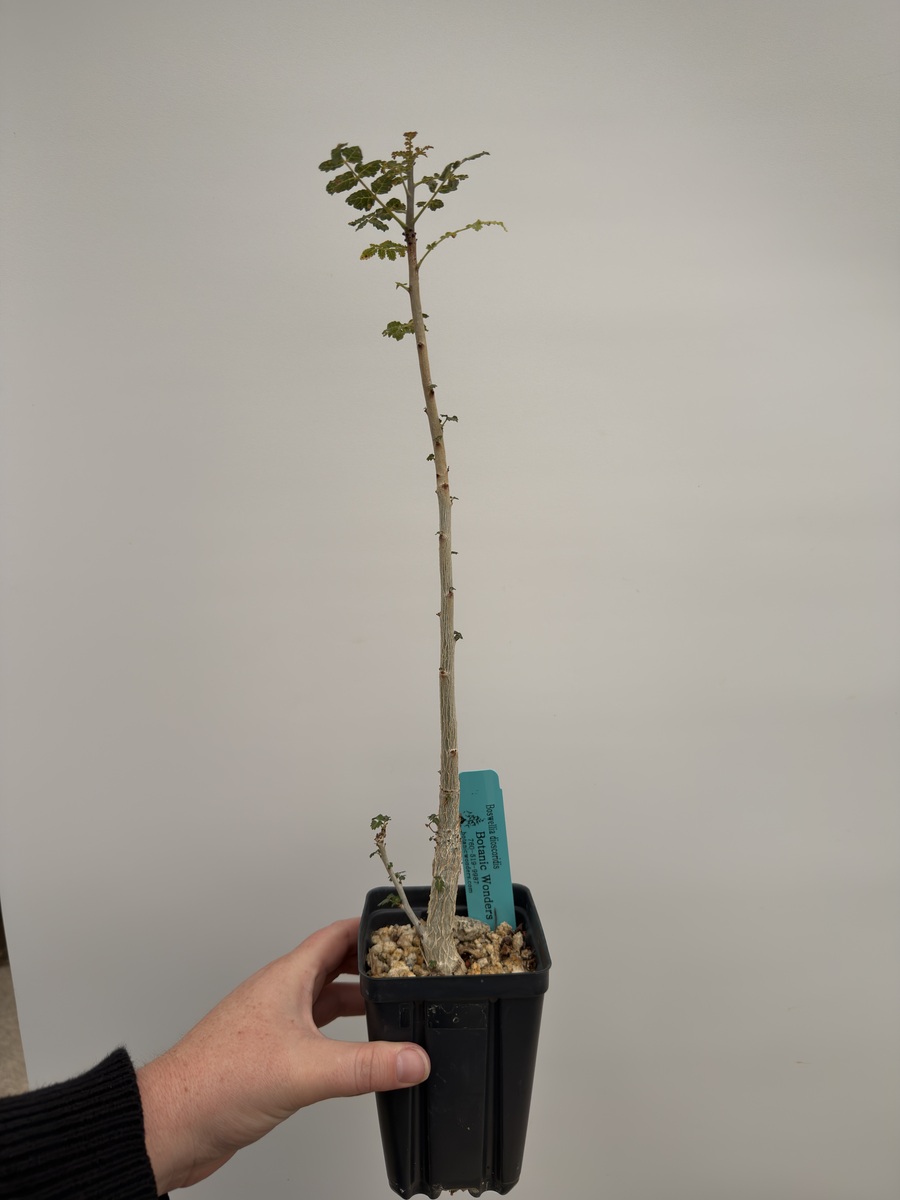
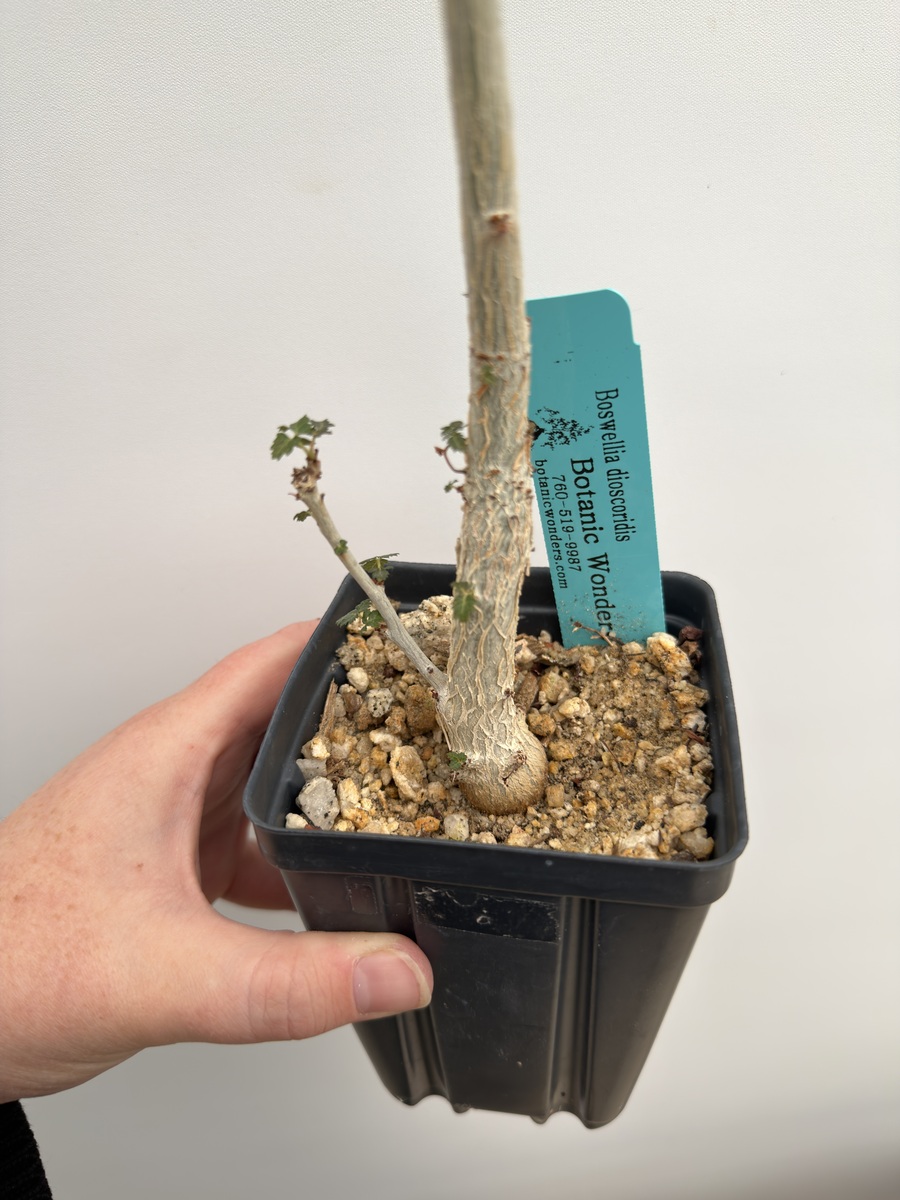
The plant develops a stout, often bottle-shaped or pachycaul trunk with smooth, pale gray to silvery-white papery bark that exfoliates in thin sheets, a feature characteristic of the genus. From the crown emerges a dense, twisted network of branches bearing small, compound pinnate leaves with finely toothed leaflets. The foliage is deciduous, dropping during the dry season and re-emerging when conditions favor active growth, lending the tree a strong seasonal rhythm.
Like all members of the genus, Boswellia dioscoridis produces an aromatic resin when the bark is wounded, the same family of resins that yields frankincense from related species. The fragrance is one of the quiet pleasures of growing the plant. Flowers are small, with white to pinkish petals and a central disc, borne in loose panicles and carrying both male and female parts on the same bloom, so the species is bisexual rather than dioecious or monoecious. Pollinated flowers develop into small, drupe-like fruits with a hard, angular pyrene at the center that contains the seed, dispersed by wind and possibly by birds in habitat.
In cultivation, Boswellia dioscoridis requires full sun to very bright light, warm temperatures, and an exceptionally fast-draining mineral-rich soil mix. It is a strict summer grower and benefits from regular watering once leaves emerge, followed by a strict dry rest period after leaf drop in autumn. Overwatering during dormancy is the single most common cause of trouble, so a clear seasonal cycle and excellent drainage are essential.
Growth is slow but steady, and the swollen trunk thickens visibly over the years, taking on the sculptural pachycaul form that makes mature specimens so highly prized. As a Socotran endemic with restricted habitat and slow growth, well-rooted plants are uncommon in cultivation and represent a significant addition to any serious caudiciform or pachycaul collection.