




Product Description
Boswellia popoviana is a rare and highly prized pachycaul tree endemic to the island of Socotra, off the coast of Yemen, where it grows on rocky limestone slopes and cliff faces in one of the most botanically distinctive landscapes on Earth. Within a genus known for sculptural form and aromatic resin, this species is particularly valued by collectors for its compact habit, swollen trunk, and refined branch structure.
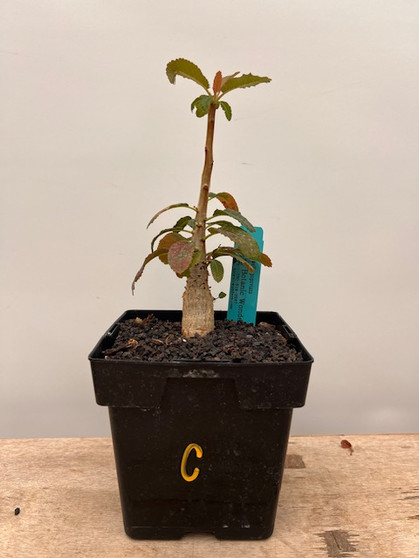
The plant develops a stout, often bottle-shaped pachycaul trunk with smooth, pale gray to whitish papery bark that peels away in thin papery sheets, revealing fresh tissue beneath, a hallmark of the genus. The trunk thickens substantially with age and provides important water storage that allows the tree to survive prolonged dry periods. From the crown emerges a dense, sculptural network of stout branches bearing small compound pinnate leaves with finely toothed leaflets. The foliage is deciduous, dropping during the dry season and re-emerging when conditions favor active growth, giving the tree a strong seasonal cycle.
When the bark is wounded, Boswellia popoviana exudes a fragrant resin in the broader family that yields frankincense from related species, a quiet but rewarding feature of growing any member of the genus. Flowers are small, typically with white to pale pink or cream petals and a prominent central disc, borne in loose panicles. Each individual bloom carries both male and female parts, so the species is bisexual rather than dioecious or monoecious. Pollinated flowers develop into small drupe-like fruits with a hard angular pyrene at the center containing the seed, dispersed by wind and possibly by birds in habitat.
In cultivation, Boswellia popoviana requires full sun to very bright light, warm temperatures, and an exceptionally fast-draining mineral-rich soil mix. It is a strict summer grower that benefits from regular watering once new leaves emerge in late spring, followed by a strict dry rest period after leaf drop in autumn. Overwatering during dormancy is the most common cause of trouble, so a clear seasonal rhythm and excellent drainage are essential.
Growth is slow, and the swollen trunk thickens gradually over many years to take on the sculptural pachycaul form that makes mature specimens so highly desirable. As a Socotran endemic with restricted habitat and slow steady growth, well-established plants are uncommon in cultivation and represent a notable addition to any pachycaul or caudiciform collection focused on the unique flora of Socotra.