

Product Description
Aloe meyeri is a compact, slow-growing aloe native to the rugged Richtersveld region along the border of South Africa and Namibia, where it grows tucked among quartzite rocks and steep cliff faces in one of the most arid environments inhabited by any aloe. The species is named in honor of Pieter Meyer, a noted South African plant collector, and it remains relatively uncommon in cultivation, prized by collectors for its restrained habit and refined character.
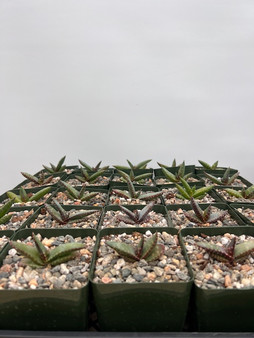
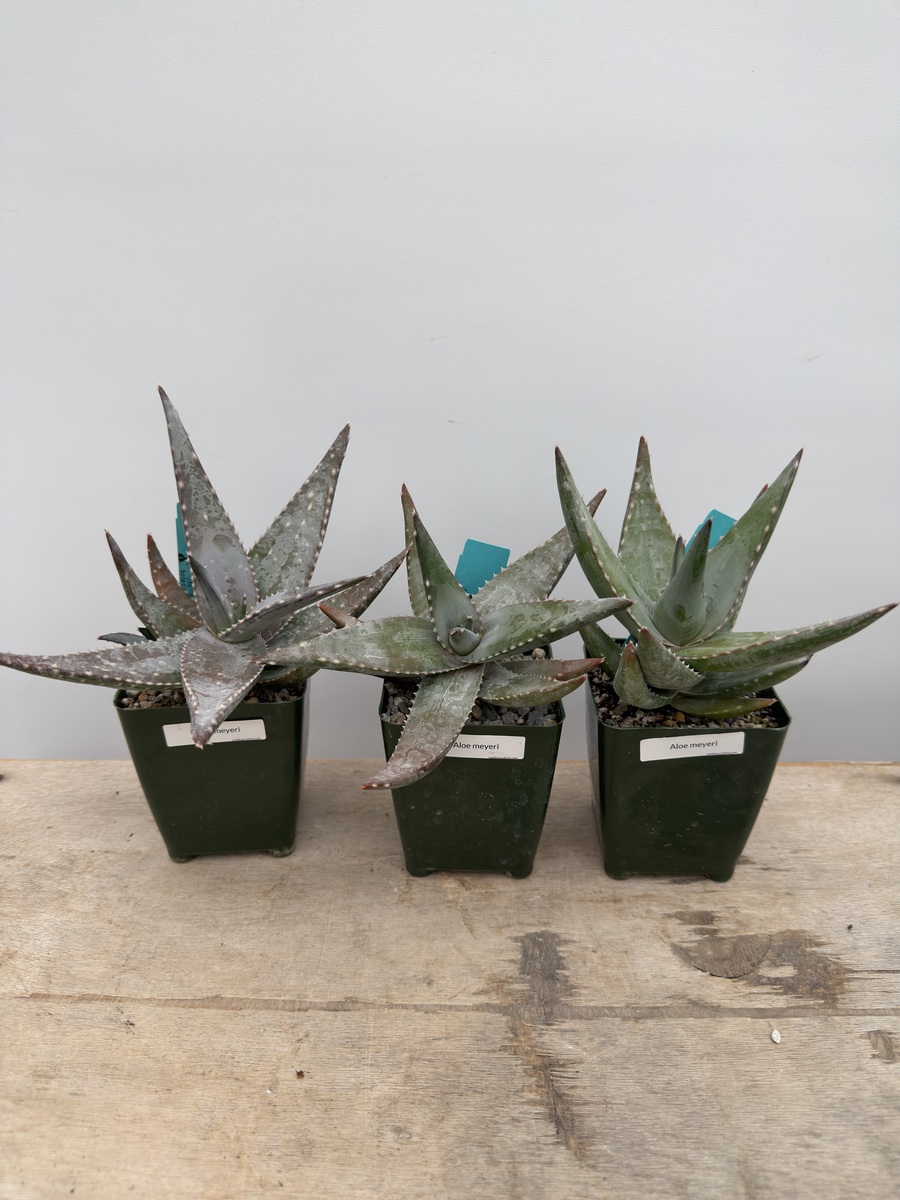
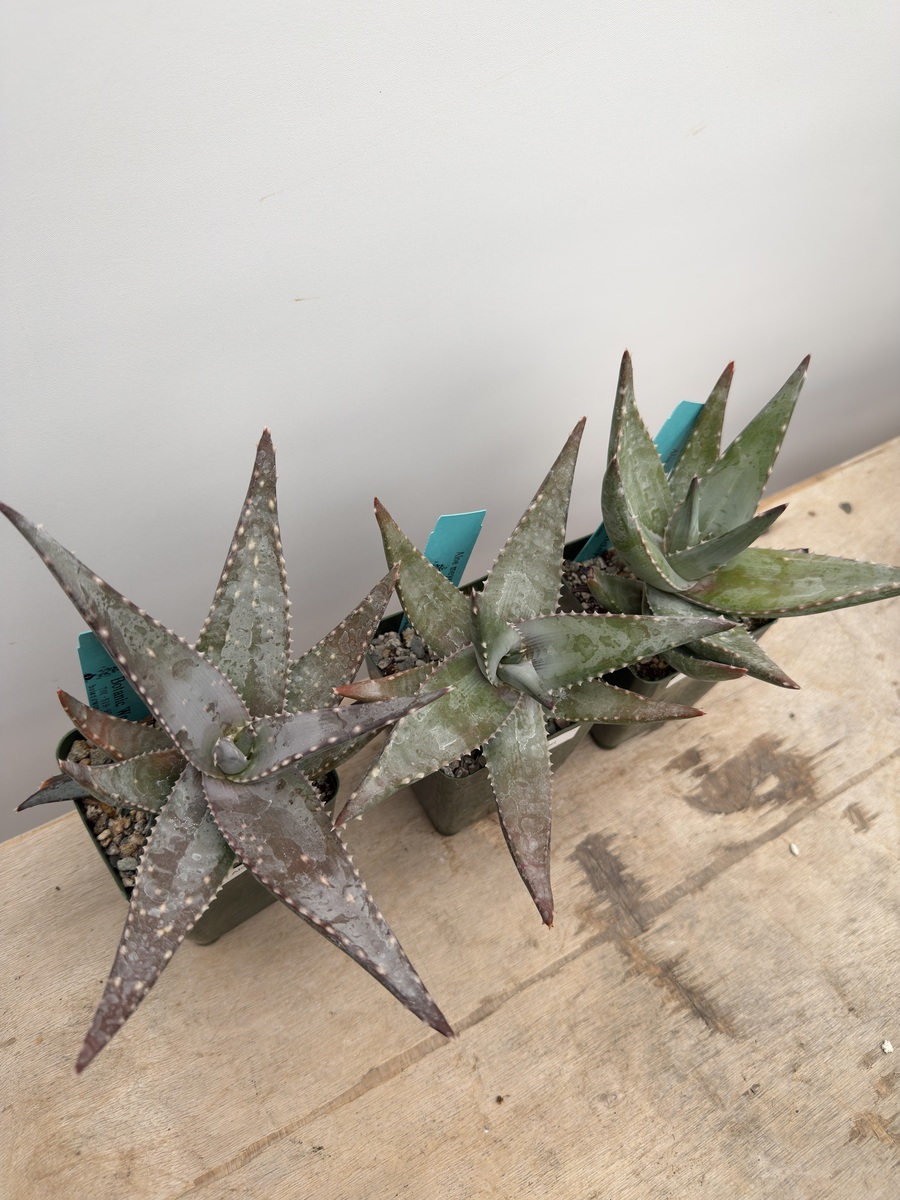
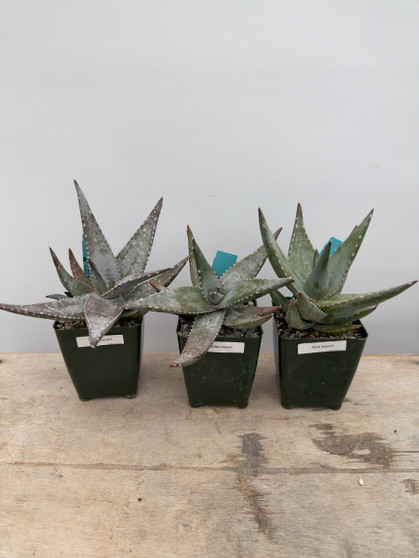
The plant forms a small, tightly held rosette of stout, gray-green to bluish-gray leaves that often take on attractive reddish or coppery tones under bright light and dry conditions. Leaves are short, lanceolate, and edged with small pale teeth, terminating in a fine point. Mature specimens occasionally branch from the base to form modest clusters, but the plant remains relatively compact, generally not exceeding eight to twelve inches across.
In summer, Aloe meyeri produces a slender, unbranched inflorescence rising from the center of the rosette, bearing a loose raceme of tubular flowers in shades of dull red to orange-red. As with all true aloes, the flowers are bisexual (perfect), each carrying both male and female parts on a single bloom, so the species is neither dioecious nor monoecious. Pollinated flowers develop into small, dry, three-chambered capsules that split open at maturity to release flat, winged black seeds.
In cultivation, Aloe meyeri prefers full sun to very bright light, warm temperatures, and a fast-draining mineral-rich soil mix with minimal organic content. It is highly drought tolerant and is best watered sparingly during the cooler growing months, with a markedly drier rest period through the heat of summer when it slows or pauses growth. Excellent drainage and restrained watering are essential, as the plant is intolerant of prolonged moisture at the roots.
Growth is slow and the plant rewards patient cultivation with a beautifully proportioned, almost mineral quality. The combination of restricted habitat, slow steady growth, and refined form makes Aloe meyeri a quiet but highly collectible species for those drawn to the smaller, more sculptural members of the genus.