

Product Description
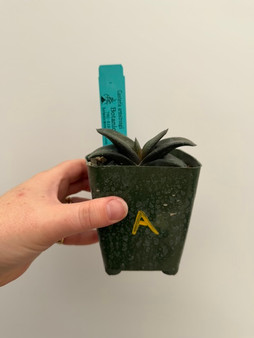
Aloe pearsonii x Gasteria glomerata is an unusual and highly distinctive intergeneric hybrid, combining two of the more architecturally interesting members of the Asphodelaceae family. Crosses between Aloe and Gasteria produce hybrids commonly referred to as Gasteraloes (×Gasteraloe), and this particular combination unites the unique stacked-leaf architecture of Aloe pearsonii with the compact, smooth-leaved character of Gasteria glomerata.
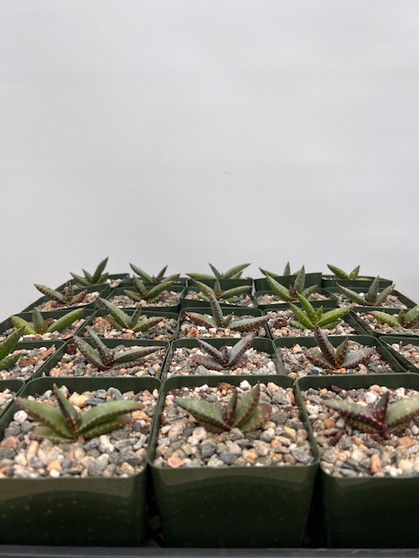
Aloe pearsonii is itself a remarkable species from the Richtersveld of South Africa, known for its tightly stacked, opposite-ranked leaves that climb a slender stem, producing a column-like or candelabra growth form unlike anything else in the genus. Gasteria glomerata, native to the cliffs of the Eastern Cape, contributes a compact clumping habit, smooth, gray-green tongue-shaped leaves, and a tolerance for partial shade. The hybrid blends these traits into a plant of restrained size, with thick, fleshy leaves arranged in a tighter, more compact form than typical Aloe pearsonii, often showing attractive coloration that intensifies under bright light.
Mature plants produce slender, often arching inflorescences with tubular to slightly belly-shaped flowers reflecting both parents, typically in shades of orange-red to coral with paler tips. As with both parent genera, the flowers are bisexual (perfect), each bloom carrying both male and female parts, so the plant is neither dioecious nor monoecious. Intergeneric hybrids of this type often show reduced fertility, so seed set may be limited or absent, and the plants are typically propagated vegetatively by offsets or stem cuttings.
In cultivation, this hybrid is among the easier members of the broader aloe alliance, appreciating bright light with some protection from the harshest direct sun, warm temperatures, and a fast-draining mineral soil mix. Watering should be moderate during active growth and reduced during the warmest part of summer. The plant tolerates a wider range of light conditions than many pure aloes, making it more adaptable to indoor and partially shaded settings.
The combination of unusual parentage, compact form, and adaptable cultivation makes this hybrid a particularly rewarding plant for collectors interested in intergeneric crosses and the curious forms they can produce.