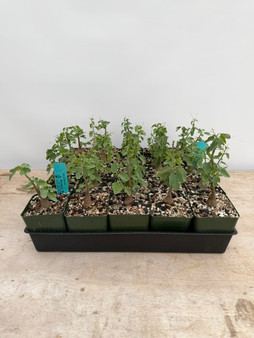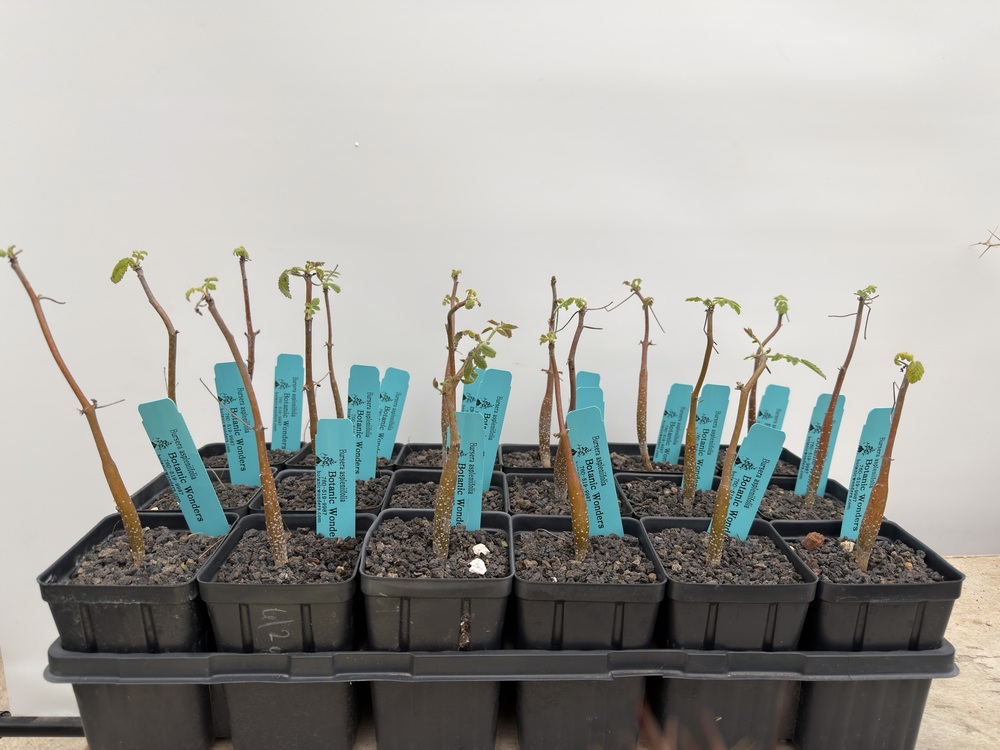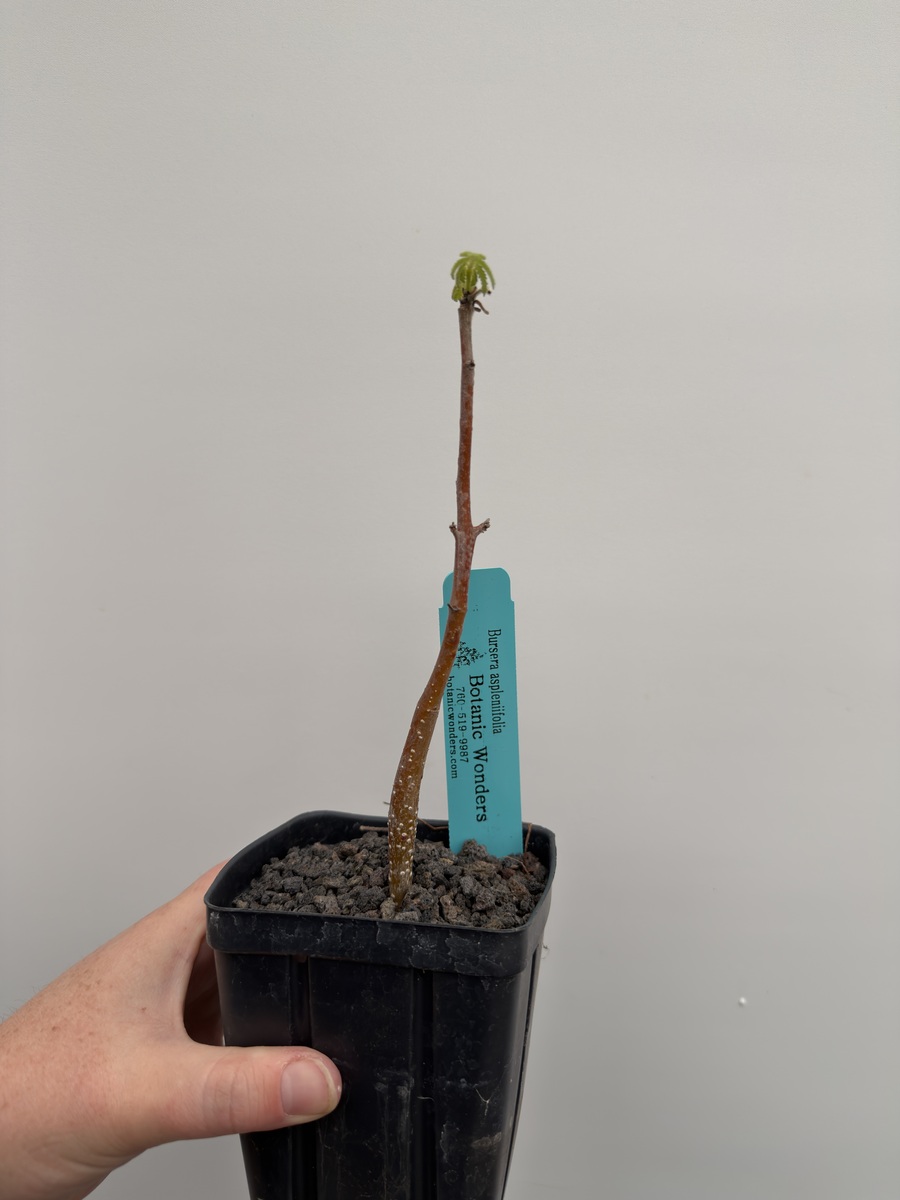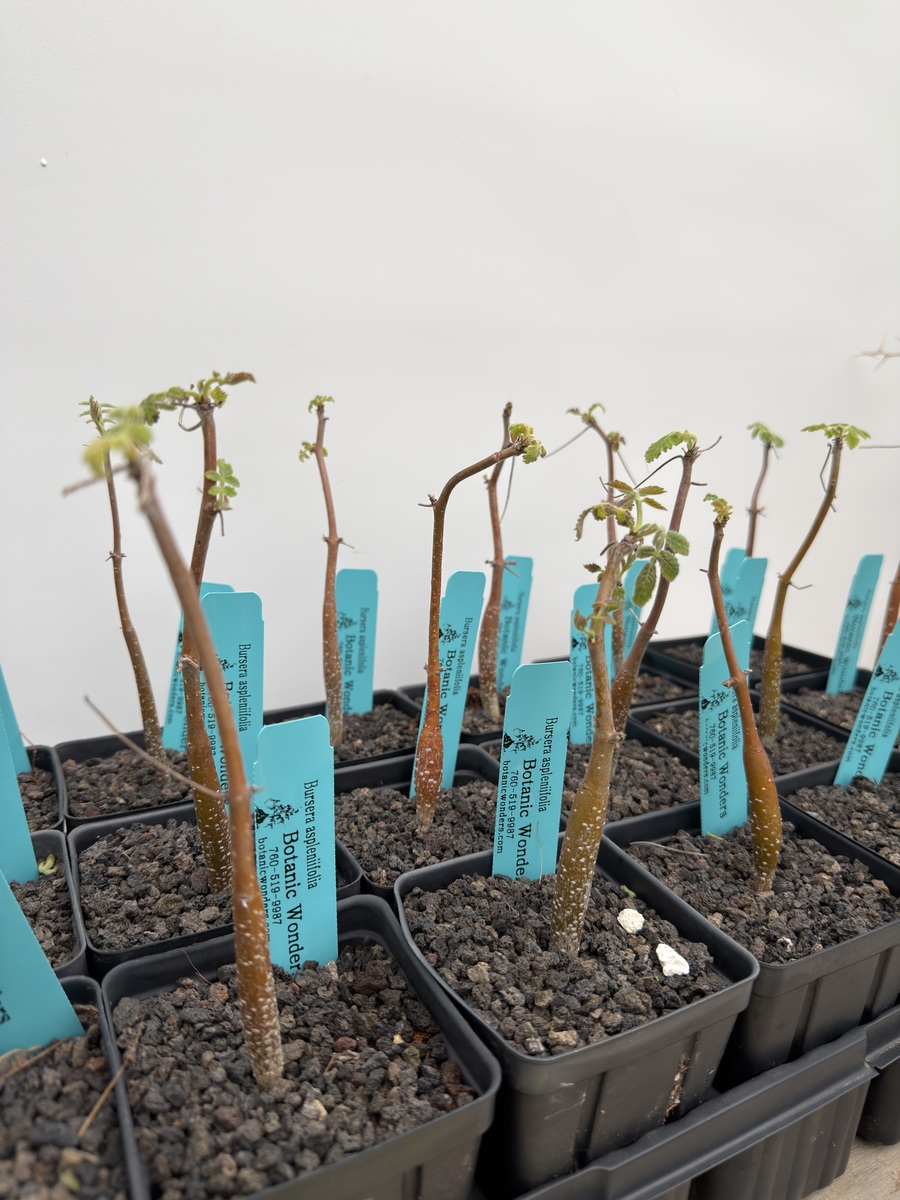


Product Description
Bursera aspleniifolia is a distinctive small tree native to the tropical dry forests of western Mexico, particularly in the states of Jalisco, Michoacán, and Guerrero, where it grows on rocky slopes and limestone outcrops in seasonally arid conditions. The species name, derived from the fern genus Asplenium, refers to the unusually finely divided leaves, which give the plant a delicate, almost lacy appearance that distinguishes it from most other members of the genus.
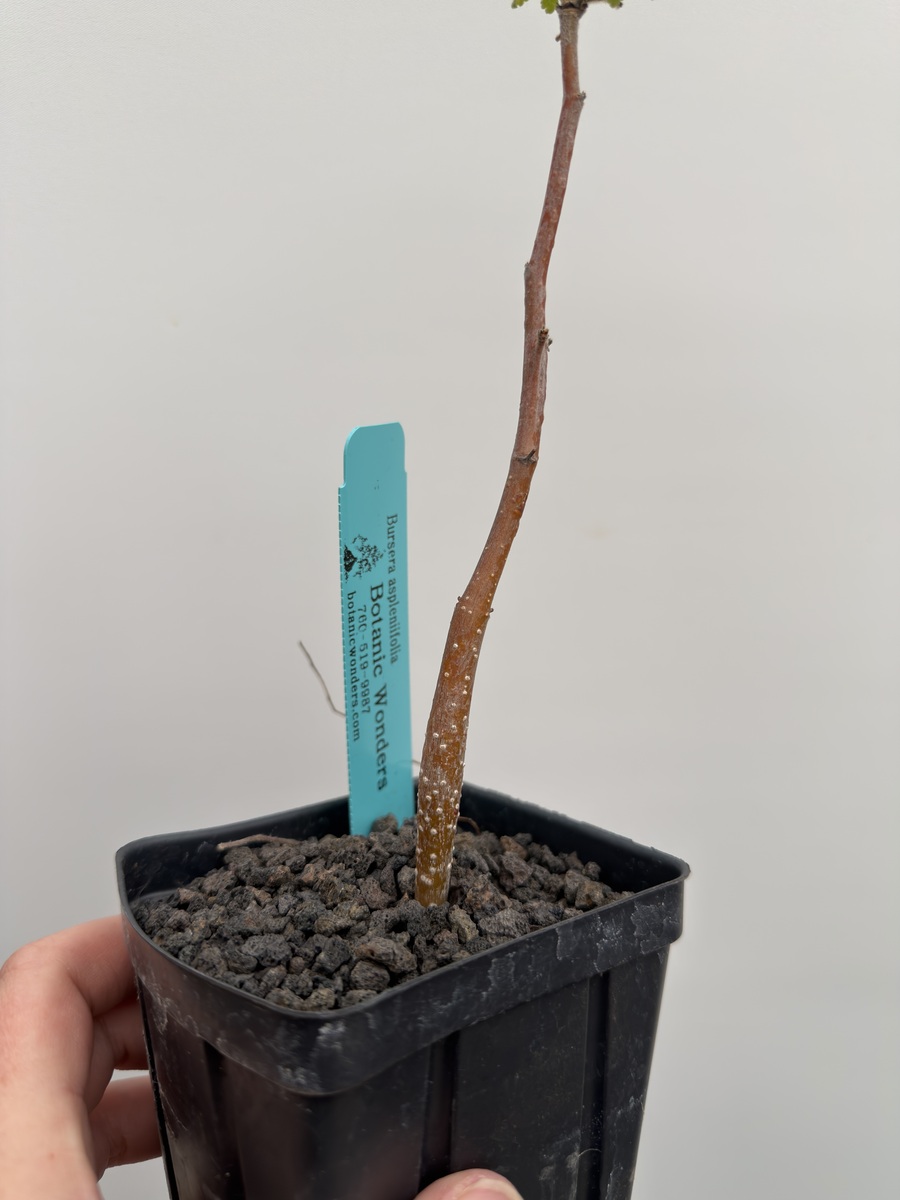
The plant develops a stout, often pachycaul trunk with smooth, papery bark that ranges from pale gray to coppery red and exfoliates in thin sheets, a feature shared across the genus. The trunk thickens steadily with age, lending mature specimens a sculptural quality well suited to bonsai and specimen container culture. The compound leaves are finely pinnate, almost fern-like, with numerous small leaflets that emerge bright green in spring and drop in the dry season, giving the tree a strong seasonal rhythm.
Like all members of the genus, Bursera aspleniifolia produces an aromatic resin when the bark is wounded, with a sharp citrus-pine fragrance that is one of the quiet rewards of growing the plant. Small inconspicuous flowers appear in spring or with the first flush of growth, typically pale cream to greenish-white, arranged in small panicles. As with most Bursera species, the plants are dioecious, meaning male and female flowers are borne on separate individuals, so two plants are generally needed for seed production. Pollinated female flowers develop into small, dry drupes that split at maturity to reveal a single seed partly enclosed by a colorful red or orange aril, an arrangement that attracts birds for dispersal.
In cultivation, Bursera aspleniifolia prefers full sun to very bright light, warm temperatures, and a fast-draining mineral-rich soil mix. It is a summer grower and benefits from regular watering once the leaves emerge, followed by a strict dry rest period after leaf drop in autumn. Overwatering during dormancy is the most common cause of trouble, so a clear seasonal cycle and excellent drainage are essential.
The delicate foliage, attractive papery bark, and aromatic resin make Bursera aspleniifolia one of the most refined and ornamental members of the genus, and well-grown specimens are highly valued by collectors of pachycaul trees and dry-forest bonsai subjects.