

Product Description
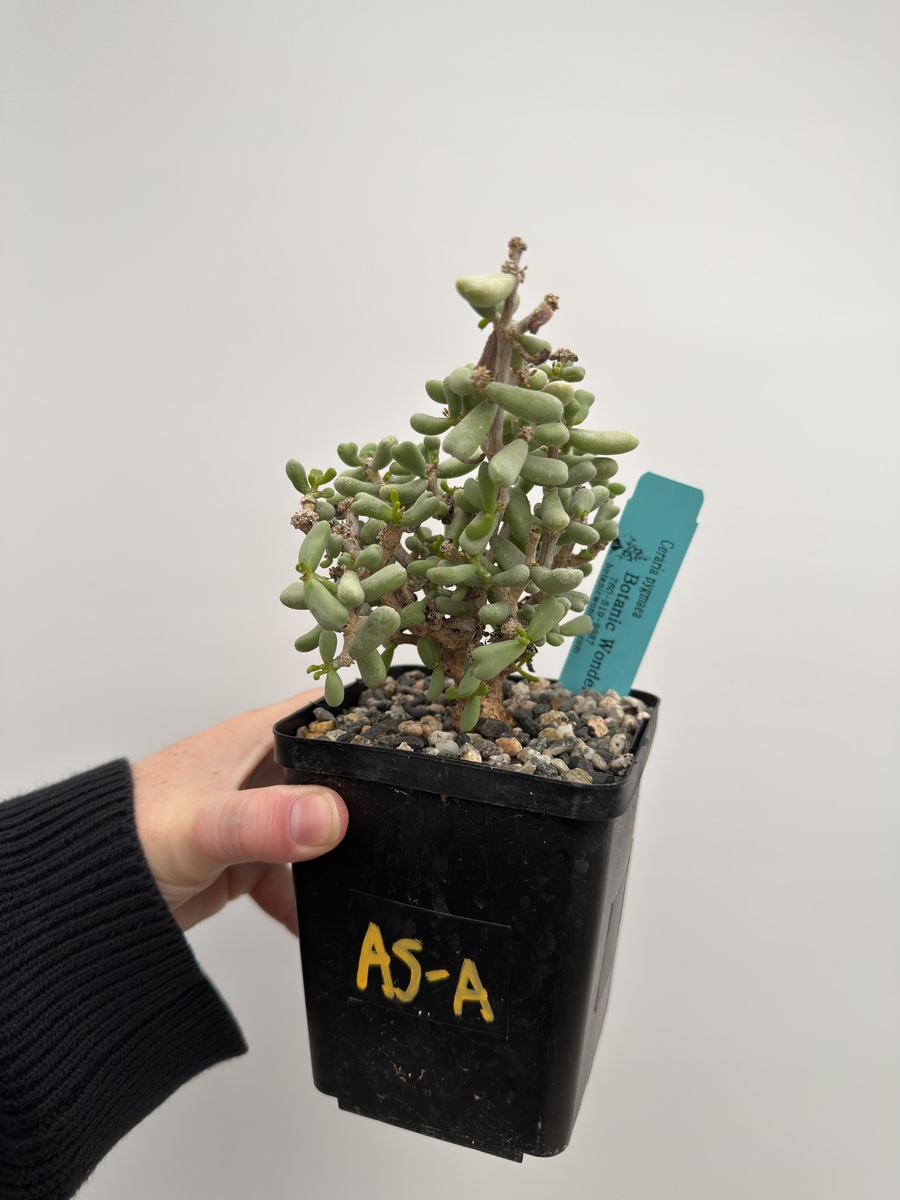
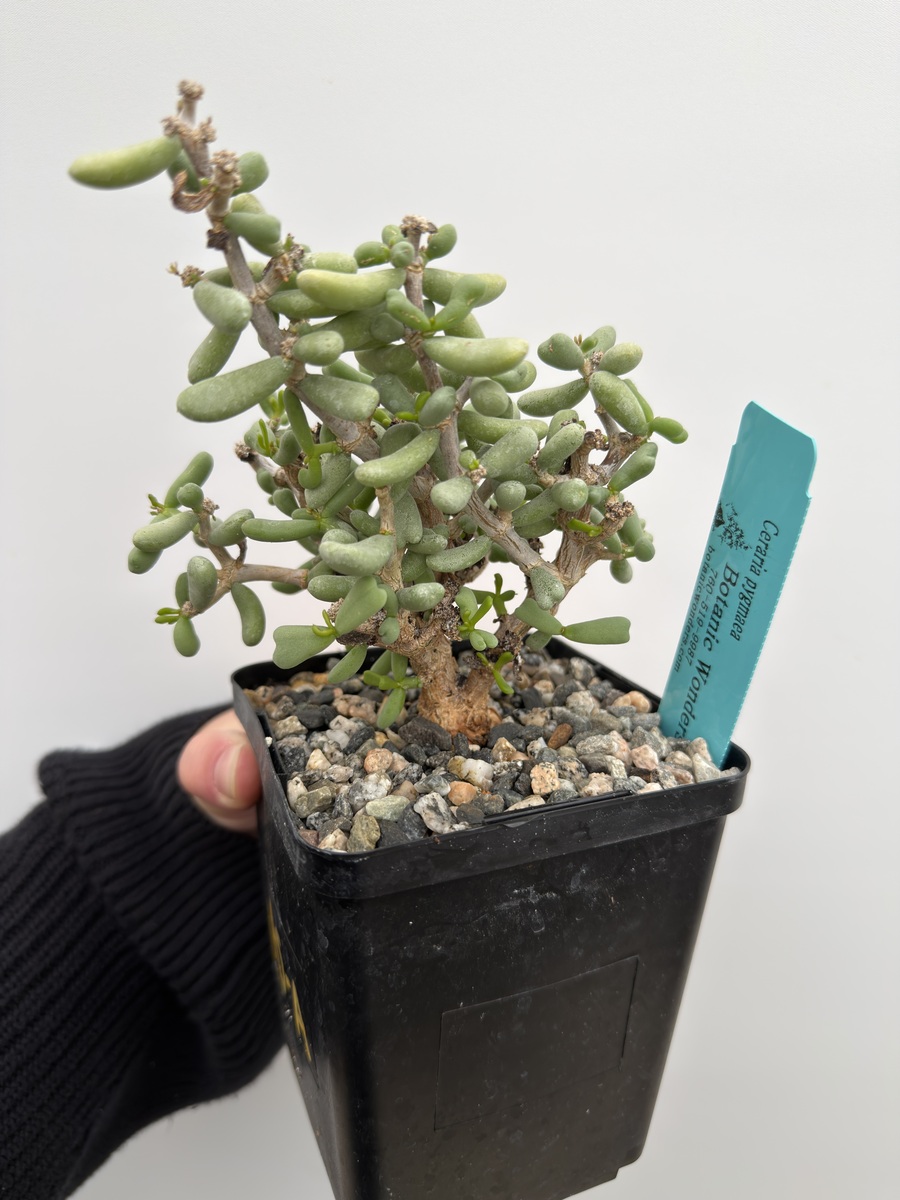
Ceraria pygmaea is a small, slow-growing dwarf shrub endemic to the arid Richtersveld and adjacent regions of northwestern South Africa and southern Namibia, where it grows tucked among quartzite rocks and gravel plains in one of the most extreme dryland habitats on Earth. The species is a member of the Didiereaceae family (formerly placed in Portulacaceae) and develops a compact, almost bonsai-like form with a thick, swollen, often gnarled and twisted caudex-like base that thickens substantially with age. From this stout trunk emerge short, knobby branches densely covered with small, fleshy, gray-green to glaucous blue-green succulent leaves arranged in tight clusters at the nodes. The overall form, combined with the slow growth and refined proportion, makes mature specimens highly prized as natural bonsai subjects.
In spring and early summer, mature Ceraria pygmaea produces small star-shaped flowers in shades of pink to magenta, arranged in small clusters at the branch tips. As with all Ceraria species, the plants are dioecious, meaning male and female flowers are borne on separate individuals, so two plants of opposite sex are required for seed production. Pollinated female flowers develop into small, dry, papery winged fruits adapted for wind dispersal, characteristic of the family. In cultivation, the species requires full sun to very bright light, mild to warm temperatures, and an exceptionally fast-draining mineral-heavy soil mix. It is a winter grower, active during the cool months with a strict dry summer rest period when overwatering is the principal cause of trouble.