

Product Description
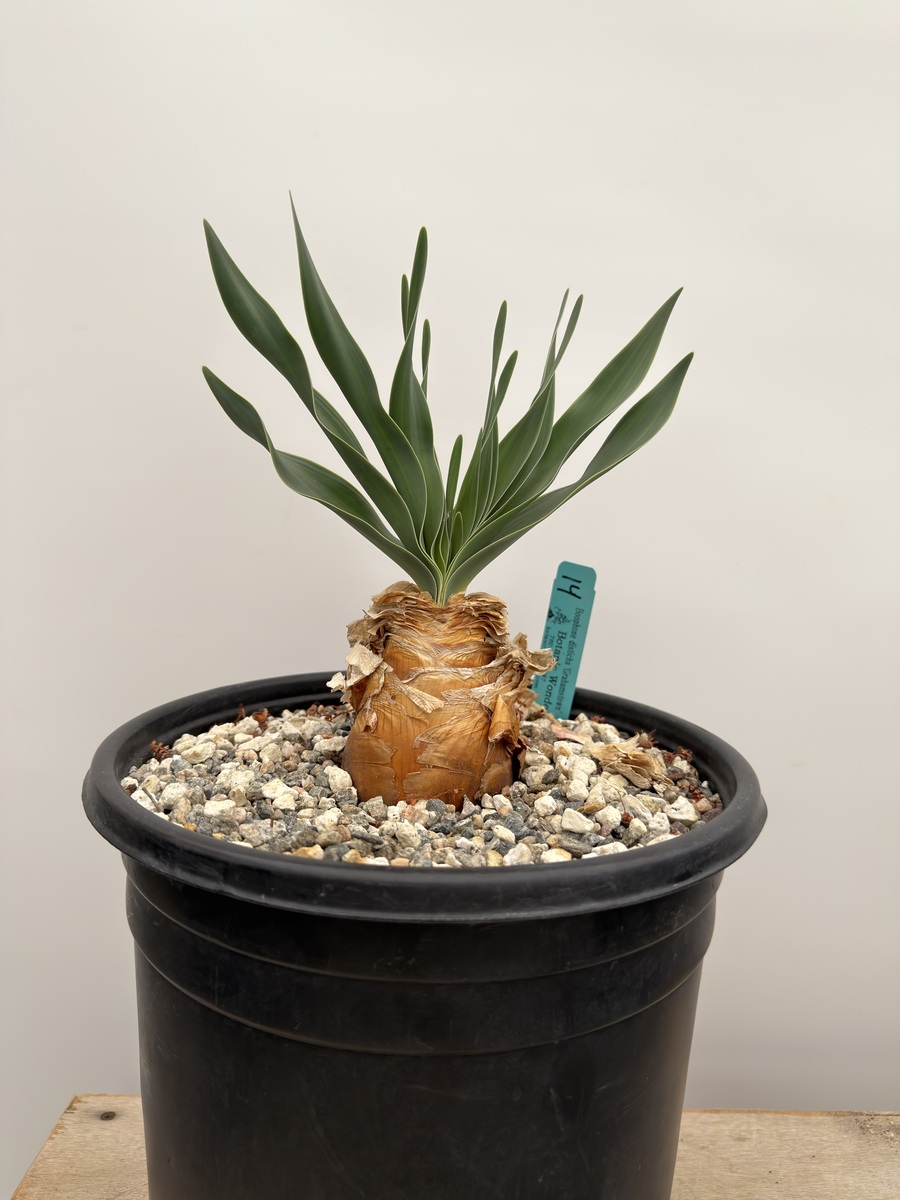
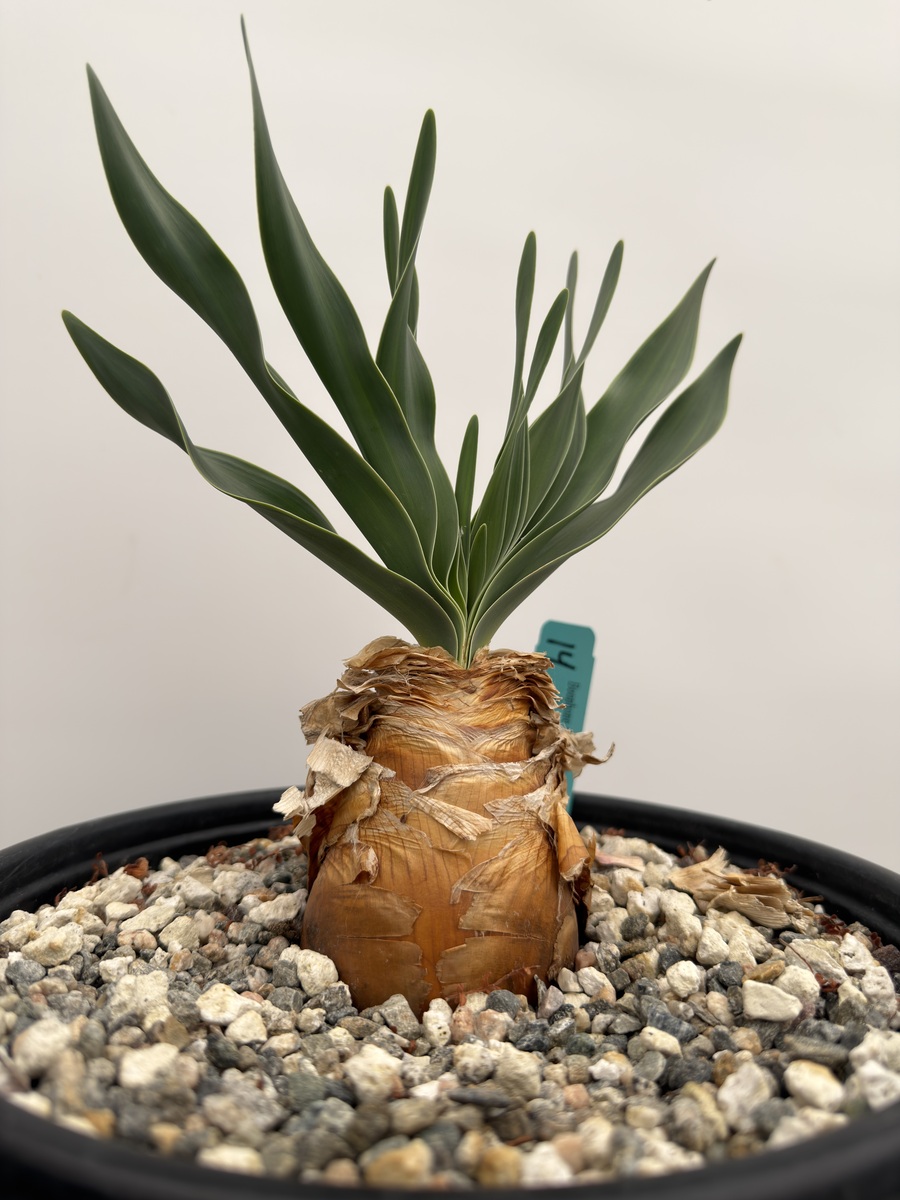
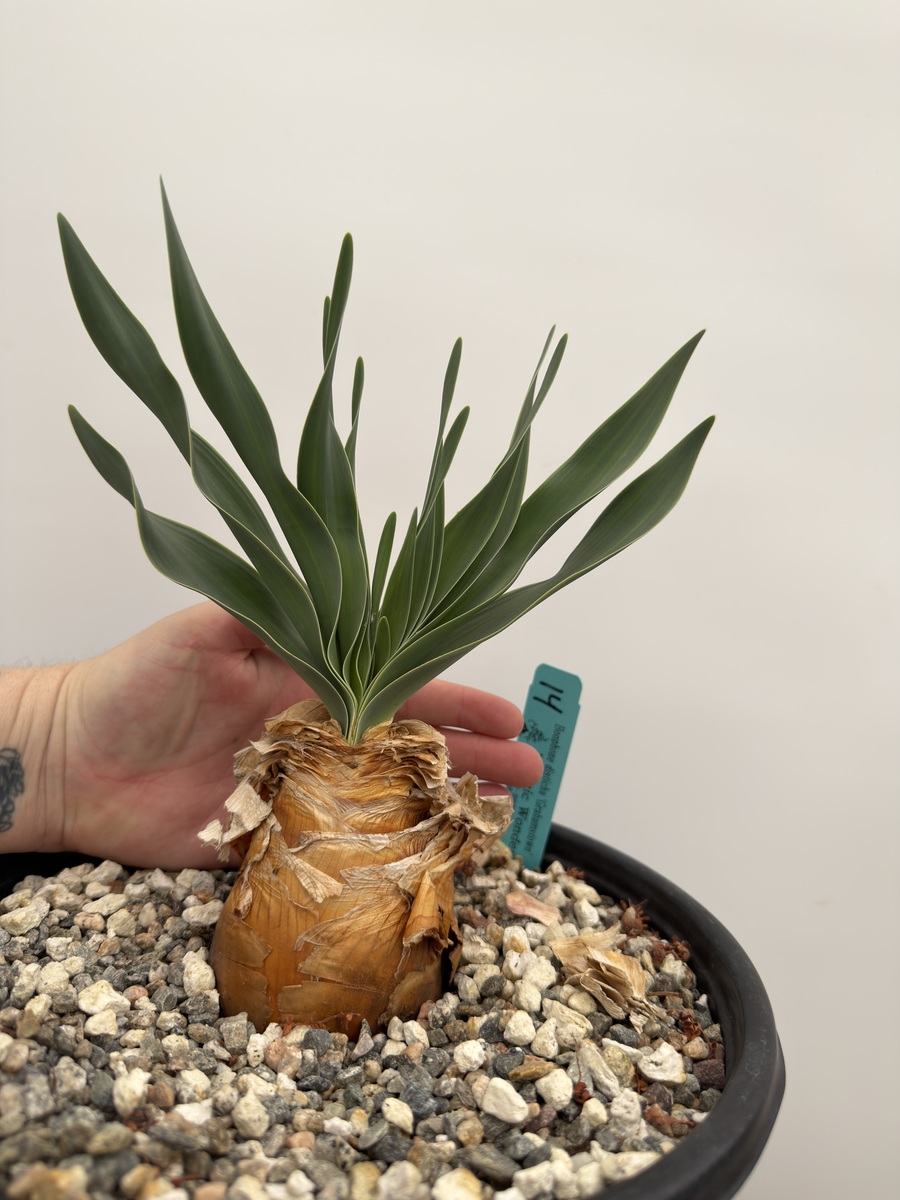
Boophone disticha 'Grahamstown' is a particularly desirable form of the widespread southern African bulb species Boophone disticha (note: "Boophone" is the now-preferred orthographic correction of the older spelling "Boophane"), selected from the population growing around Grahamstown (now Makhanda) in South Africa's Eastern Cape. A member of the amaryllis family (Amaryllidaceae), the species ranges across much of southern and eastern Africa, growing in grasslands and on rocky slopes. The defining feature of the genus is the production of a large, partially-exposed, papery-tunicated bulb that can grow to remarkable size with age—mature specimens of B. disticha can develop bulbs nearly a foot in diameter, partly buried with the upper portion exposed at the soil surface like a giant onion. The epithet "disticha" refers to the strict distichous (two-ranked) arrangement of the leaves, which emerge in a perfect fan from the top of the bulb; the leaves are typically gray-green, often with wavy, undulate margins—a notable trait of the Grahamstown form, which is particularly prized for its strongly crisped or wavy-edged foliage. All parts of the plant are highly toxic, containing alkaloids historically used by San and Khoi peoples to make arrow poison.
In spring or early summer, mature Boophone disticha 'Grahamstown' produces a striking inflorescence that emerges before or with the new flush of leaves—a stout stalk topped by a dense, spherical umbel of many small, narrow, pink to salmon-red flowers radiating outward like fireworks, earning the common names "tumbleweed lily" and "Cape poison bulb." After pollination by long-tongued flies and butterflies, the spent inflorescence dries and detaches at the base, rolling away in the wind like a tumbleweed to scatter its papery winged seeds across the landscape. In cultivation, this species is a winter grower in the southern hemisphere or a summer grower depending on hemisphere and acclimation; provide bright light to full sun, a very fast-draining mineral soil mix, and water moderately during the active growing season while keeping nearly dry during dormancy. The bulb should be planted with its upper half exposed above the soil. Minimum temperatures should stay above 30°F, and patience is required—this species is famously slow-growing.